
Dhanvantri, the God of Ayurveda
Dhanvantari, in Hindu mythology, is the physician of the gods, an avatar and embodiment of Vishnu, who is the preserver and protector of material creation. Dhanwantri, the God of Ayurveda,
Dhanvantari, in Hindu mythology, is the physician of the gods, an avatar and embodiment of Vishnu, who is the preserver and protector of material creation. Dhanwantri, the God of Ayurveda,
Dhanvantari, a hindu mitológiában, az istenek orvosa, Visnu avatarja, megtestesülése, aki az anyagi teremtés fenntartója és védelmezője. Dhanwantri, az ayurvéda Istene ayurvédikus tudását Brahmától kapta. A legenda szerint az istenek
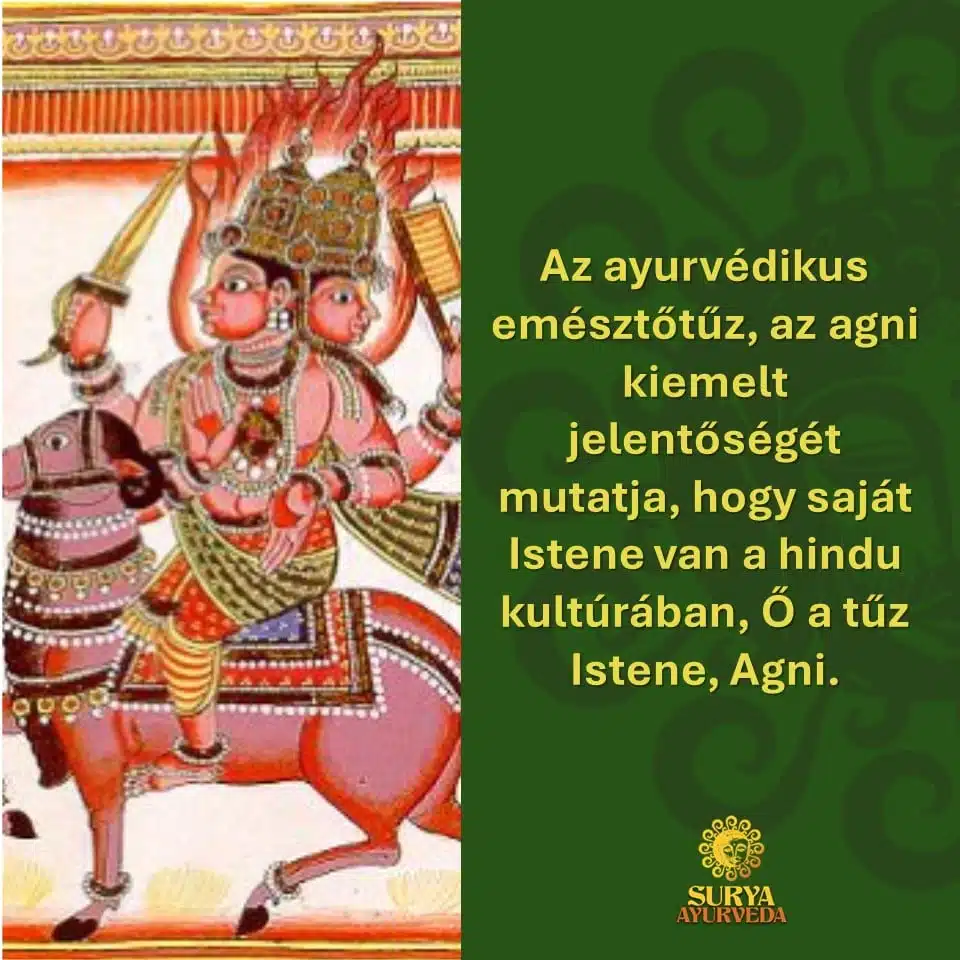
Agni, the God of Fire, is associated with all forms of fire: natural fires, the sun, comets, household fires, sacrificial fires, funeral pyres, and the digestive fire within every individual.
Agni, a Tűz Istene minden tűzhöz kapcsolódik: a természetes tüzekhez, a naphoz, az üstökösökhöz, a háztartási tüzekhez, az áldozati tüzekhez, a temetési tűzhöz és az emésztőtűzhöz minden emberben. Az ayurvéda

Ayurveda is the oldest practiced form of medicine, a natural healing method over 5000 years old, with its foundations rooted in Indian culture. It is applied worldwide, and its principles are evident in most natural healing modalities.
Az ayurvéda az orvostudomány legrégebb óta gyakorolt formája, több mint 5000 éves természetes gyógymód alapjai az indiai kultúrában gyökereznek. Világszerte alkalmazzák, elvei megjelennek a legtöbb természetes gyógymódban.
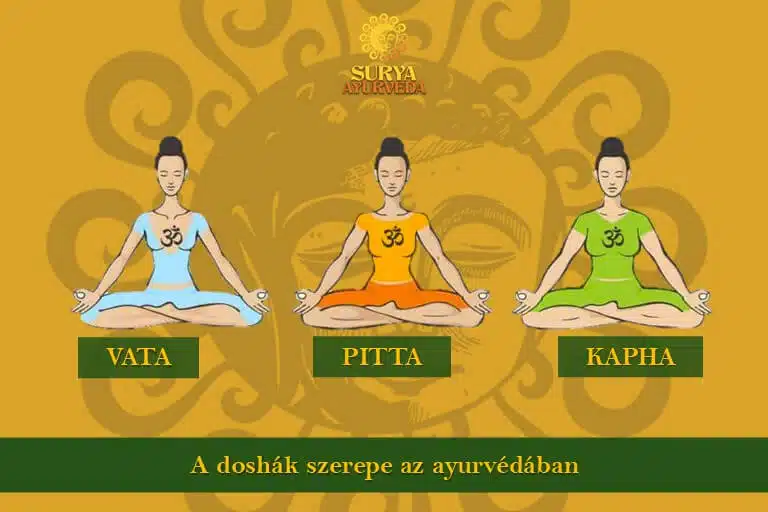
When defining Ayurvedic body types based on doshas, it is important to note that these descriptions reflect the pure aspects of each constituent element; however, no individual constitution is composed of only one element.
az ayurvédikus testtípusok dóshák szerinti meghatározásakor fontos figyelembe venni, hogy a típusleírások valamennyi építőelem tiszta aspektusát tükrözik: ugyanakkor egyetlen egyéni alkat sem csupán egyetlen elemből áll.

The word Ayurveda is of Sanskrit origin, consisting of two words: ayu – life and veda – knowledge, meaning the science of life. It is one of the world’s oldest holistic healing methods, encompassing the entire body, which considers and treats not only the diseased organ or body part but the entire human organism.
Az ayurvéda szó szanszkrit eredetű, két szóból áll: ayu – élet és vida – tudás, az élet tudománya. A világ egyik legősibb holisztikus, egész testet érintő gyógyítási módszere, mely nemcsak a megbetegedett szervet vagy testrészt, hanem az egész emberi szervezetet figyelembe veszi és gyógyítja.

VATA DIET CONSUMABLE FRUITS: blueberry, apple (cooked), pineapple, banana, lemon, cherry, date (raw or soaked), persimmon, strawberry, fig (raw or soaked), grapefruit, lime, raspberry, mango, orange, peach, papaya, apricot, plum
VATA DIÉTA FOGYASZTHATÓ GYÜMÖLCSÖK: áfonya, alma (főtt), ananász, banán, citrom, cseresznye, datolya (nyersen vagy beáztatva), datolyaszilva, eper, füge (nyersen vagy beáztatva), grapefruit, lime, málna, mangó, narancs, őszibarack,