


- The word Ayurveda means ‘the science of life’: ayur = life, veda = science or knowledge.
Ayurveda is the oldest practiced form of medicine, a natural healing method over 5000 years old, with its foundations rooted in Indian culture. It is applied worldwide, and its principles are evident in most natural healing modalities. - Ayurveda adopts a holistic perspective, as it posits that the quality and state of our mind, body, and spirit collectively determine our overall health. This holistic approach therefore addresses not only the physical body but also the well-being of the soul and spirit; when these are in balance, we achieve a harmonious life.
- Ayurveda places great emphasis on prevention, a healthy lifestyle, and a proper diet, as these ensure long-term health.
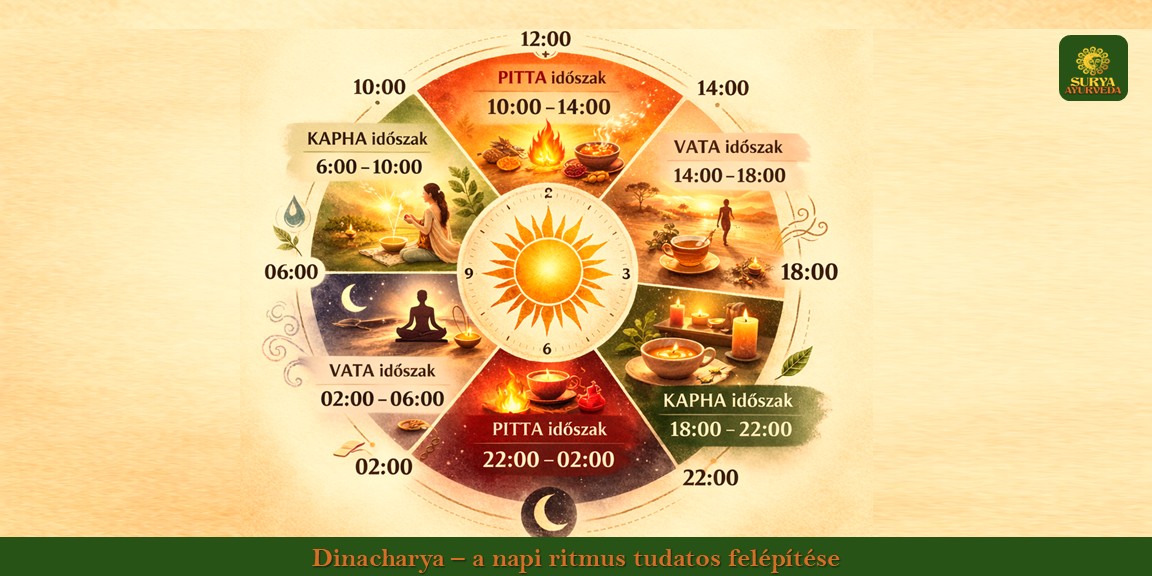
- Ayurveda maintains a close connection with nature, teaching us how to live in harmony with it. One method for achieving this is the daily routine, or dinacharya, integrated into our everyday lives. This routine and rhythm has a beneficial effect on our general health and well-being.
- According to Ayurveda, each individual possesses a unique prakriti, which is comprised of a distinct combination of the three doshas, or body types – Vata, Pitta, and Kapha. The specific way these doshas manifest within each of us, in unique proportions, determines our fundamental nature: our physical constitution, our mental and emotional life, and how we pursue our purpose in this life.
- Ayurveda utilizes natural remedies and methods. It is not necessary to radically alter one’s life to achieve balance; rather, it is sufficient to introduce specific practices incrementally. This approach allows us to naturally return to a state of equilibrium and good health.
Should you wish to learn more about Ayurveda, we cordially invite you to an initial consultation or to experience one of our massages or treatments.