

In Western culture, rice is often seen as a simple side dish or a diet food.
In Asian cultures, however, rice is much more: according to Ayurveda, rice is a sacred grain, embodying life itself and carrying the deeper, spiritual aspects of nourishment. This is reflected in the Sanskrit word “anna,” which literally means “food” or “edible rice,” and also refers to the physical body. Anna is not just a food item, but the foundation of our outer self, capable of embodying the deeper energies within us.
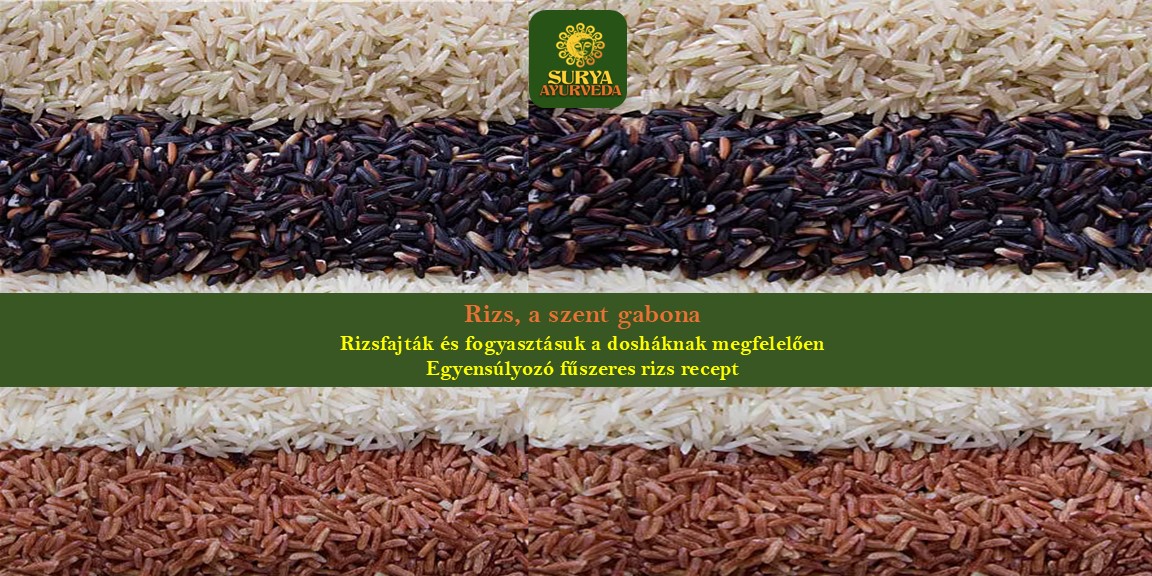
Rice Varieties and the Doshas
Ayurveda evaluates foods, including rice, in terms of balancing the doshas (Vata, Pitta, Kapha). Rice that is perfect for one dosha may cause difficulties for another.
- Vata (Air and Space): People with Vata energy tend to be light, dry, and irregular. Their digestion is often unpredictable, so heavy, high-fiber foods can cause bloating and gas. White rice is ideal for them. Polished white rice is easy to digest, sweet, and nourishing. It cooks quickly, helping to avoid anxiety caused by long waiting times.
- Pitta (Fire and Water): Pitta types have a dominant fire element, giving them strong digestion, so they generally tolerate brown rice well. However, if Pitta is out of balance, causing impatience or excessive heat (e.g., heartburn), cooling, sweet, and quickly cooked white rice can help. Basmati rice is one of the best choices for Pitta, as its cooling properties and light texture support digestion.
- Kapha (Earth and Water): Kapha dosha is associated with stability, heaviness, and slow digestion. Therefore, rice should be consumed moderately and less frequently by Kapha types, as its building and moist qualities can further increase Kapha energy. If they do eat rice, brown or wild rice is preferable, as the high fiber and husk support digestion and ignite digestive “fire.”
Choosing and Preparing Rice
When selecting rice, consider individual constitution—not just the choice between white and brown rice.
- Basmati Rice: Known as the “queen of lightness.” Long, slender grains are easy to digest and have a distinctive, aromatic fragrance.
- Jasmine Rice: Aromatic like basmati but less dry, becoming fuller after cooking. Its cooling quality makes it suitable for hot summer days.
- Short-Grain Rice: Varieties like sushi rice or Arborio are high in starch and become sticky when cooked, challenging slow digestion. Kapha types should avoid them, while Vata types may benefit from the grounding effect of soft, sticky rice.
Cooking Methods Affect Rice’s Effect
- Steaming: The gentlest method. Rice softens slowly with steam and water, retaining nutrients and a light, tender texture.
- Boiling: Ideal for harder grains. High heat causes grains to open, releasing more starch and resulting in stickier rice.
- Frying: Cooking with oil increases rice’s “building” and heavy qualities. Nutritious for those with weakness, but those with Pitta or Kapha imbalance should avoid fried rice.
Use appropriate spices to balance the effects: ginger, cardamom, cumin, or turmeric can support digestion and enhance rice’s benefits.
Healing Recipe: Spiced Rice for Dosha Balance
Ayurvedic massage and proper nutrition go hand in hand. With the recipe below, you can prepare a healing dish at home to support your internal balance and complement your Ayurvedic treatment.
This recipe is ideal for Vata and Pitta doshas, while Kapha types should reduce ghee and add more ginger or black pepper to stimulate digestion.
Ayurvedic Spiced Basmati Rice
Ingredients:
- 1 cup basmati rice
- 2 cups water
- 1 teaspoon ghee (clarified butter)
- 1/2 teaspoon cumin
- 1/4 teaspoon turmeric
- A pinch of cardamom powder
- A pinch of asafoetida (hing) – optional, helps reduce gas
- Salt to taste
Preparation:
- Rinse the rice several times in cold water until the water is clear.
- Heat ghee in a saucepan over medium heat.
- Add cumin, turmeric, cardamom, and asafoetida; sauté for one minute until fragrant.
- Add the drained rice and stir 1–2 minutes, coating each grain with the spiced ghee.
- Pour in water, add salt, and bring to a boil.
- Once boiling, reduce heat to the lowest, cover, and cook for 15–20 minutes until all water is absorbed.
- Remove from heat and let stand, covered, for another 5 minutes. Fluff the grains with a fork before serving.