


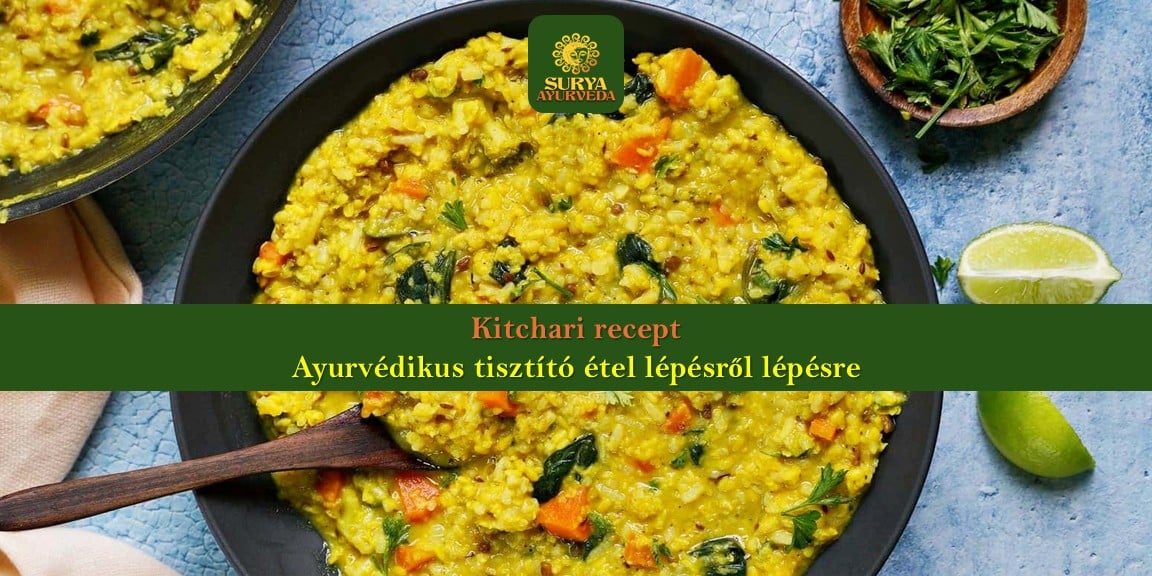
Kitchari Recipe – Ayurvedic Cleansing Dish with Professional Guidance
Kitchari (kichadi) is one of Ayurveda’s foundational dishes, used therapeutically, particularly during cleansing and regenerative processes, such as during or following panchakarma.
The dish’s simple composition – a combination of mung dal and basmati rice with appropriate spicing – allows it to:
- place minimal burden on the digestive system
- support the functioning of agni (digestive fire)
- facilitate the breakdown and elimination of ama (undigested matter)
Kitchari is therefore not merely food, but a functional, therapeutic dish that serves to restore balance.
Ingredients (Classic Base Recipe)
- 1/2 cup yellow mung dal (split mung bean)
- 1/2 cup basmati rice
- 1 tablespoon ghee (clarified butter)
- 1 teaspoon cumin
- 1 teaspoon turmeric
- 1–2 cm fresh ginger (grated)
- pinch of asafoetida (hing) – optional, but professionally recommended
- salt to taste
- 4–5 cups water
Optional vegetables (depending on therapeutic purpose): carrot, zucchini, small amount of leafy greens
Preparation – with Ayurvedic Considerations
- Rinse the mung dal and rice thoroughly until the water runs clear.
- In a pot, heat the ghee, then add the cumin and ginger.
- After briefly sautéing, add the turmeric and (if using) the asafoetida.
- Add the mung dal and rice, then pour in the water.
- Cook over low heat for 25–30 minutes until you achieve a soft, creamy consistency.
- The goal is an easily digestible, almost “pre-digested” texture.
Important: kitchari is not a “dry rice dish,” but a soft, one-pot preparation.
The Effect of Kitchari on Digestion and the Body
The effectiveness of kitchari in Ayurveda derives from several factors:
Agni support:
The warm, cooked, spiced dish supports the stable functioning of digestive fire.
Ama reduction:
Due to its easy digestibility, no additional ama is formed; in fact, it aids in its breakdown.
Dosha balancing:
When properly prepared, it affects all three doshas:
- Vata: grounding and warming
- Pitta: balancing (with mild spicing)
- Kapha: light and cleansing
Therapeutic Application
Kitchari is typically recommended in the following cases:
- during or after a panchakarma program
- in cases of digestive disturbances
- during heightened physical or mental exhaustion
- during seasonal transitions (especially in spring)
For short periods, it can even be used as a mono-diet, with professional guidance.
Variations by Body Type (Fine-Tuning)
- For Vata: more ghee, softer consistency
- For Pitta: fewer spices, cooler vegetables
- For Kapha: less rice, more spices, drier consistency
When Is Kitchari Consumption Ideal?
- during spring cleansing periods
- during post-illness regeneration
- after overload or stress
- when digestion is weaker
Kitchari is one of Ayurveda’s simplest, yet most profoundly effective dishes.
It not only nourishes but supports the restoration of the body’s natural balance – especially during periods when the body is overloaded or in need of regeneration.
During the spring renewal period, easily digestible, warm foods – such as kitchari – help the body return to its own rhythm and more effectively release accumulated burdens.
Balance from Within
In the Ayurvedic approach, diet and treatments together support genuine transformation.
Kitchari is a simple yet effective tool for initiating this process.
If deeper regeneration is needed, Ayurvedic treatments assist with:
- supporting digestion
- calming the nervous system
- restoring the body’s balance
📍 Treatments available at:
Szentendre and Budapest District II