5 Common Food Combinations That May Cause Bloating
According to Ayurveda, it matters not only what you eat, but also how you combine foods. 5 bloating-causing food combinations from an Ayurvedic perspective.

According to Ayurveda, it matters not only what you eat, but also how you combine foods. 5 bloating-causing food combinations from an Ayurvedic perspective.

Navratri in Ayurveda is a period for restoring inner balance. Spring renewal, nervous system regeneration, and gentle purification all in one.
The simplest and most effective tool for restoring balance is nutrition. Instead of counting calories, Ayurveda focuses on the 6 basic tastes (Rasa). By consuming the appropriate tastes, we can calm excessive energy (such as Pitta’s fire) and strengthen missing qualities (such as Vata’s grounding).

Ayurveda is the science of life, closely built upon the rhythms of nature. During Makar Sankranti, winter’s dark, cold, and dry energies (Vata dosha) gradually give way to increasing light and warmth. This transition is a particularly sensitive period for the body.

Ayurvedic Christmas Menu: Hungarian fish soup, stuffed cabbage, poppy seed bread pudding, and Indian dal, cheese curry, carrot pudding. Recipes with dosha tips, so that Christmas is about inner peace, not bloating!

Discover Golden Milk (or Haldi Doodh), which Ayurvedic medicine has considered a secret to daily health preservation for thousands of years.

Diwali, also known as Dípávalí (the “row of lamps”), is one of the most beautiful and significant five-day festivals of Hindu culture and Indian traditions. According to the Gregorian calendar, it is usually held in October-November, around the autumn new moon, and its universal message is light, hope, and renewal.
The Victory of Light Over Darkness

Navratri, during the seasonal transitions of spring and autumn, is an ideal time for renewing and balancing the body and mind, and for beginning a profound cleansing treatment, Panchakarma.
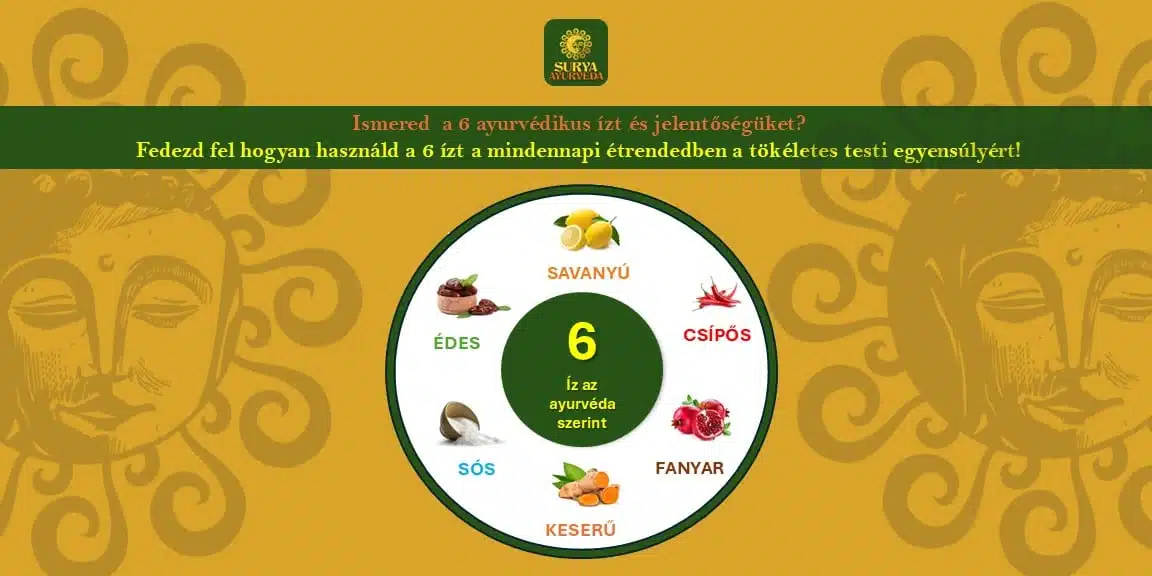
According to the principles of Ayurveda, maintaining physical and mental balance, health, and well-being requires not only the proper ratio of protein, fat, carbohydrates, and vitamin intake, but also the six fundamental Ayurvedic tastes (Rasa): sweet, salty, sour, pungent, bitter, and astringent. These tastes directly influence the doshas (Vata, Pitta, and Kapha) as well as digestion.

Prakriti is an individual’s innate, unique constitution—your state at birth. Vikriti indicates your current health condition, which can change due to external and internal factors such as poor nutrition, stress, seasonal changes, or lifestyle modifications. It is a dynamic state that constantly fluctuates. Ayurvedic assessment is the first and most important step on the path to a personalized Ayurvedic lifestyle and healing.
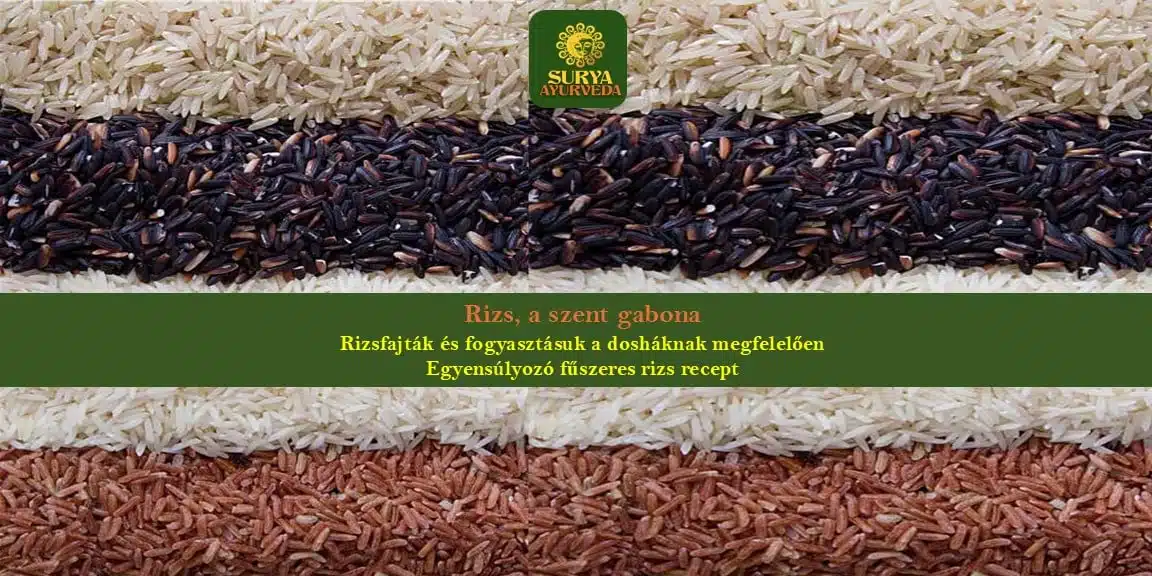
According to Ayurveda, rice is a sacred grain, embodying life itself and the deeper, spiritual aspects of nourishment. This is reflected in Sanskrit, where the word “anna,” which literally means “food” or “cooked, edible rice,” also refers to the physical body. Thus, anna is not merely a food, but the foundation of our outer self, capable of embodying the deeper energies within us.

Citrus fruits, and especially lemons, have beneficial effects during summer heat, helping to maintain the body’s Ayurvedic balance. With our Cucumber-Lemon cooler recipe, you can quickly prepare your own Ayurvedic refresher that perfectly pacifies the Pitta dosha and provides instant cooling!

During the summer season, a proper diet and lifestyle are particularly important. Citrus fruits, led by lemon, fit perfectly into this philosophy and offer numerous beneficial effects during the hot months.

Summer Heat – Finding it hard to bear? Create your inner balance with the help of Ayurveda. Read Surya Ayurveda’s tips on how to keep cool in the heat.

We already know that pepper is an ancient treasure of India, once referred to as “black gold” and even used as currency! But are we aware of how beneficial this powerful spice is, according to the thousands of years of Ayurvedic wisdom?

Ayurveda recommends consuming lukewarm or hot water
The reason for this is simple: hot water cleanses the digestive system, hydrates the body, and stimulates the lymphatic system.
Hot water primarily strengthens the digestive fire (agni) in the pachaka (stomach) and aids the development of ranjaka (digestive enzymes). On the other hand, lukewarm water enhances the effect of ahara rasa (nutrient fluid) in the digestive system.

By understanding and practicing ritucharya, the seasonal routine, and by aligning our routine with the seasons, we can prevent problems, maintain the harmony of the tridoshas, and stay healthy.

Making clarified butter at home:
Ingredients: Fresh, homemade or good quality butter.
Preparation:

Ghee, or clarified butter, is derived from the Sanskrit word ‘ghrta’, from the root ‘ghr’, meaning ‘to shine’. Ghee is a traditional Ayurvedic ingredient that has been used for centuries and is a base material in several treatments. In India, it is considered the purest and most sacred ingredient.

Recipes for Kapha Dosha from Surya Ayurveda.
Nemcsak az számít, hogy mit eszel – hanem az is, hogy hogyan, mikor és milyen állapotban.
Ajay Singh ayurvédikus szakértő segít megérteni:
🔥 Mi az agni, és miért fontos az emésztés egyensúlya
⚠️ Milyen mindennapi szokások gyengíthetik csendben az emésztésed
🧬 Vata, pitta, kapha — miért nem ugyanolyan minden puffadás
 Életmódtippek az emésztés támogatására
🩺 Mikor érdemes szakemberhez fordulnod